Average Reviews:

(More customer reviews)The Earl of Rochester lived a life worthy of Tom Jones. He was indeed a deabauched libertine, slightly less worthy of censure than the Marquis de Sade. Yet he was something that De Sade was not, a great wit. Though nowhere near the range or genius of Pope or Swift, he nevertheless compiled a great body of satirical poetry in the Juvenalian tradition. His "Satyre Against Mankind," Like Swift's Houyhnhnms chapters, present human beings in their true place in nature, despite all the panegyrics and biblical references placing us at the top of the chain. If you are lover of satire, as I am, and don't mind observations that place us amongst the lower orders rather than atop some Parnassian peak, give this volume a try.
Click Here to see more reviews about: The Complete Poems
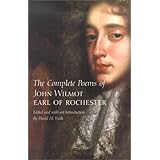
John Wilmot, the notorious Earl of Rochester, was the darling of the polished, profligate court of Charles II. One of the finest poets of the Restoration, patron to important playwrights, model for countless witty young rakes in Restoration comedies, he lived a full but short life, dying in 1680 (with a dramatic deathbed renunciation of his atheism) at the age of 33. This edition of Rochester's poetry is annotated and introduced by David M. Vieth. Rochester had many admirers: Graham Greene wrote "Lord Rochester's Monkey"; Daniel Defoe quoted him often; Tennyson recited his poems; Voltaire admired Rochester's satire for "energy and fire"; Goethe could quote Rochester in English, and Hazlitt said that "his verses cut and sparkle like diamonds" and "his contempt for everything that others repsect almost amounts to sublimity".


No comments:
Post a Comment